What Is AHK-Cu? The Alanine–Histidine–Lysine Copper Peptide
AHK-Cu is a copper(II) complex of Ala-His-Lys. This article separates sequence identity, follicle-model findings, and what those models do not prove—with links to related copper-peptide…
No products in the cart.
AHK-Cu is a copper(II) complex of Ala-His-Lys. This article separates sequence identity, follicle-model findings, and what those models do not prove—with links to related copper-peptide…
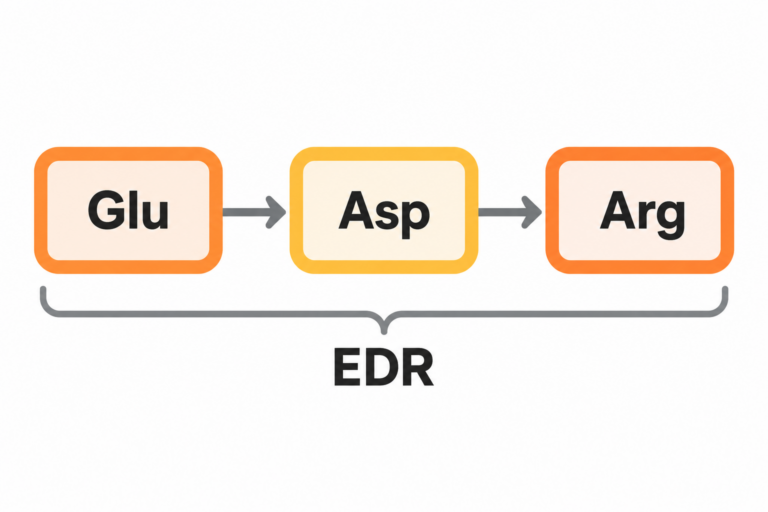
Pinealon is the synthetic tripeptide Glu-Asp-Arg (EDR). Review cell, rat-model, and mechanism studies with clear evidence boundaries—plus links for bioregulator context and research-material pages.
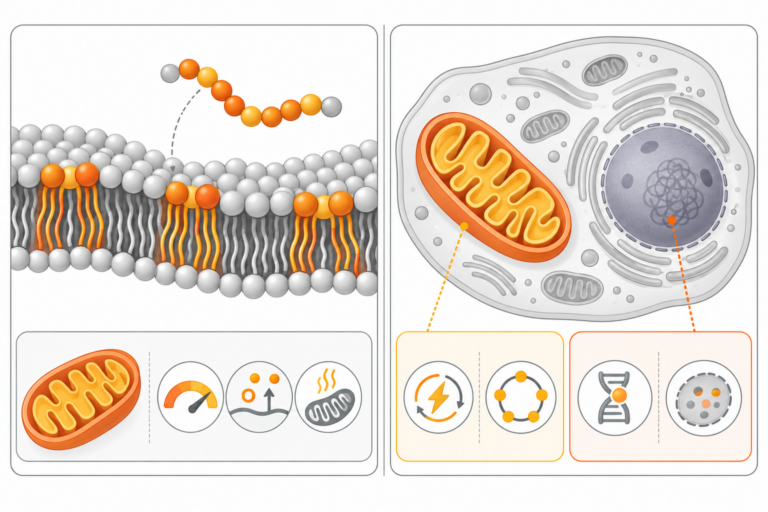
SS-31 studies examine cardiolipin-containing membranes and mitochondrial function. MOTS-c studies examine metabolic and stress-response signaling. The four studies reviewed here do not establish a head-to-head…
Thymosin alpha-1 (Tα1) is a 28-amino acid peptide originally isolated from thymic tissue by Allan Goldstein in the 1970s. It is an acetylated, N-terminally blocked…
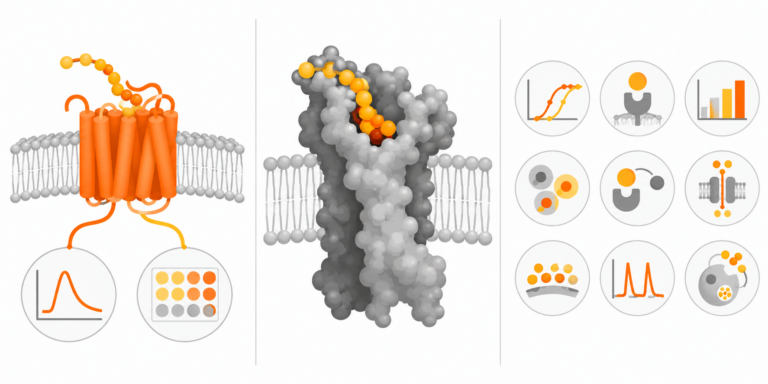
The three consulted sources describe different receptor experiments. Compare their species, systems, and endpoints before interpreting potency or selectivity; they do not provide a matched…
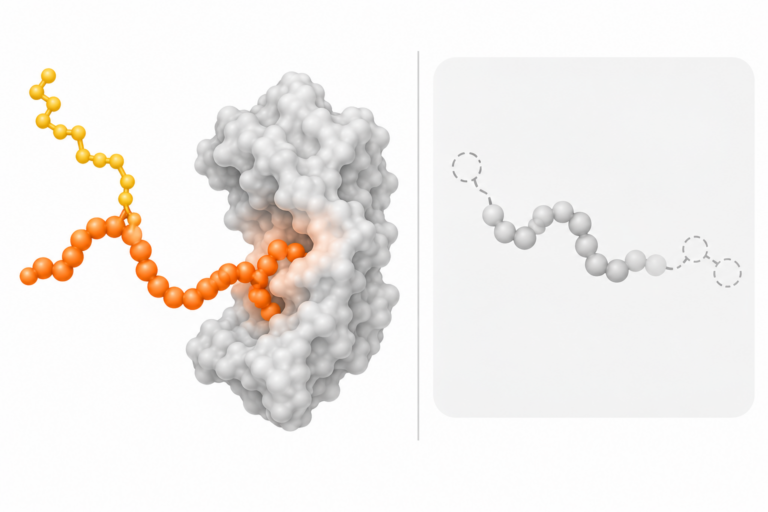
Original CJC-1295 was described with an albumin-binding modification. Its published human pharmacology cannot establish the identity or pharmacology of an unspecified no-DAC material.
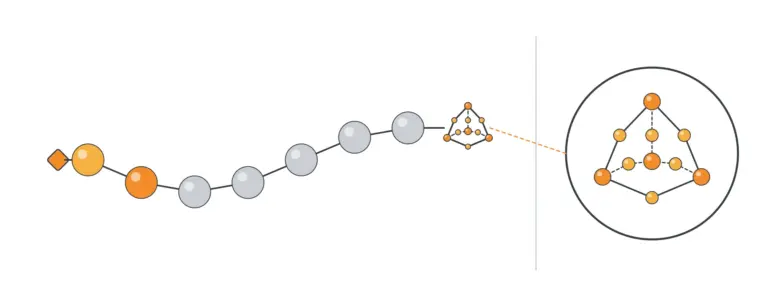
Adamax is a market name sold as two different molecules. We separate evidence from vendor claims and give calculated LC-MS masses for verification.
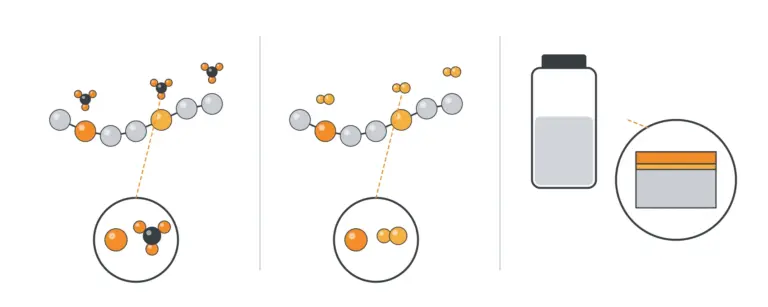
Why most synthetic peptides are TFA salts, how much of each milligram is counter-ion (calculated for six peptides), what residual TFA does in cell assays,…
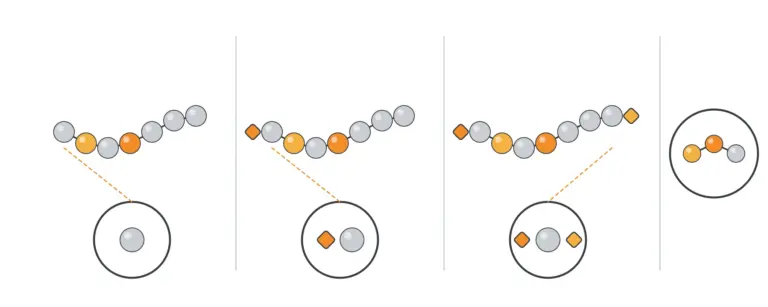
Three molecules, not one: how Selank, N-acetyl Selank and N-acetyl Selank amidate differ by mass, MS/MS and retention, why Selank’s mainly C-terminal breakdown changes the…
Last updated: 2026-10-29 · Written by: SaiyanMed Research Team · Reviewed against: 16 primary, registry and analytical sources, all linked