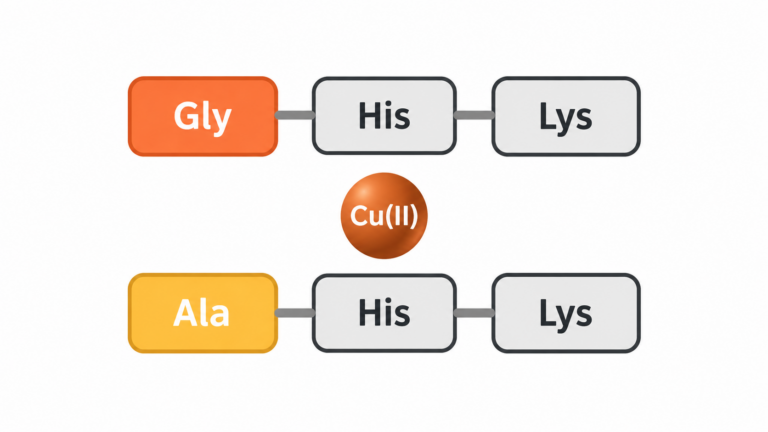
GHK-Cu vs AHK-Cu: Structure, Copper Binding, and Laboratory Research
GHK and AHK differ at the N-terminal residue: glycine versus alanine. The consulted sources describe GHK coordination and abstract-level AHK-Cu laboratory assays, but do not…
No products in the cart.
GHK and AHK differ at the N-terminal residue: glycine versus alanine. The consulted sources describe GHK coordination and abstract-level AHK-Cu laboratory assays, but do not…
LL-37 is the only cathelicidin antimicrobial peptide identified in humans. It is a 37-residue alpha-helical peptide derived from the C-terminal domain of the human cathelicidin…
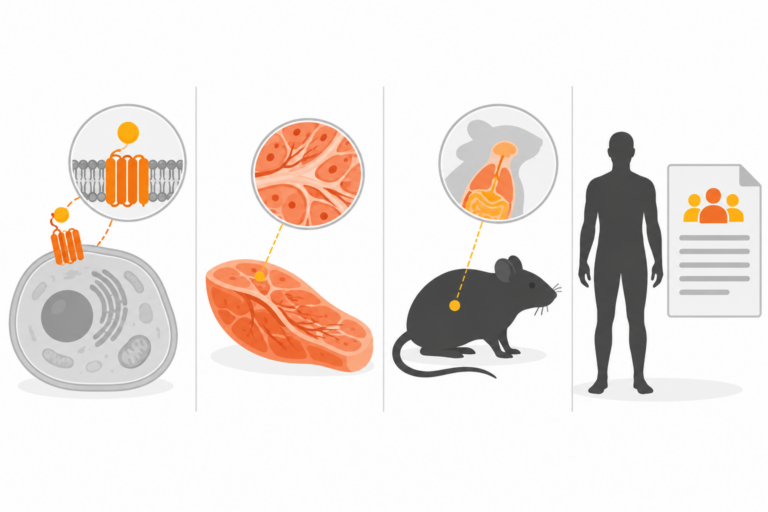
Match each peptide-research finding to its model and endpoint. A species-specific GIP example shows why binding, signaling, tissue responses, and animal results need separate interpretation.

A stability statement needs evidence that covers the claimed material and conditions. Learn how to review a batch report and interpret a published study without…
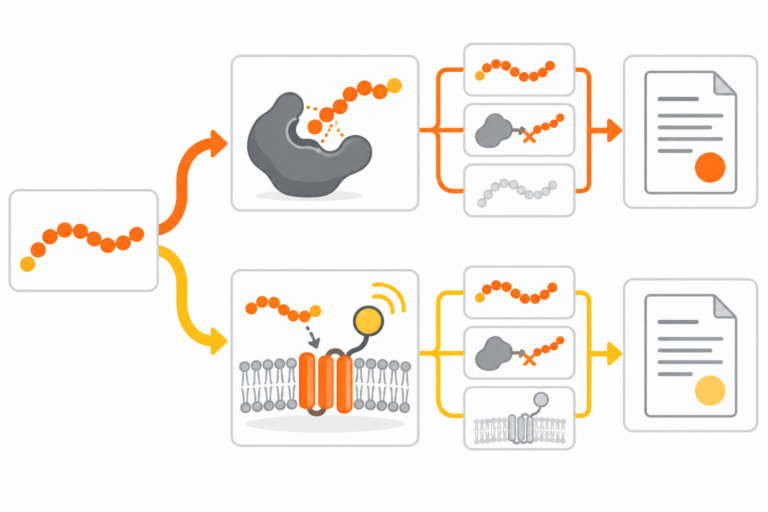
A practical framework for choosing assay readouts, planning relevant controls, and reporting what binding and functional results can support.
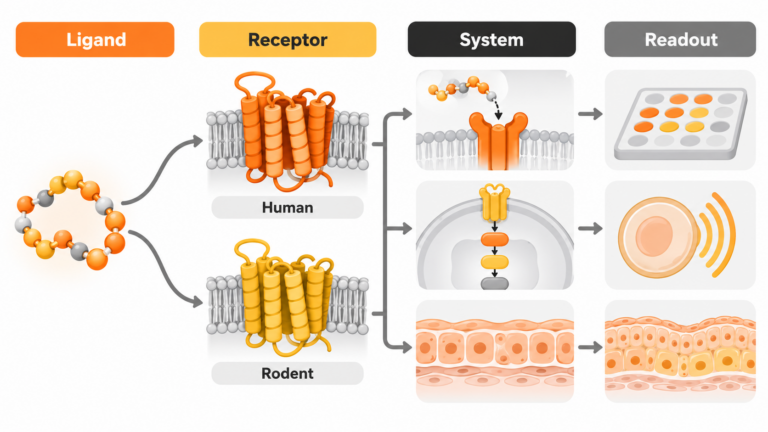
A human–rodent result depends on the exact ligand, receptor ortholog, experimental system, and measured endpoint. Published GIP, neurotensin, and kisspeptin studies show why each comparison…
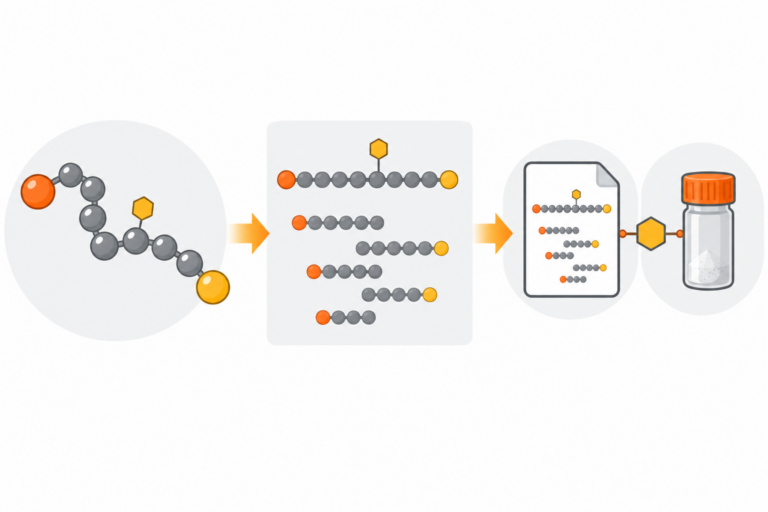
A peptide name is a starting label. Compare the stated sequence and chemical form with the analytical evidence, then check whether the tested sample is…
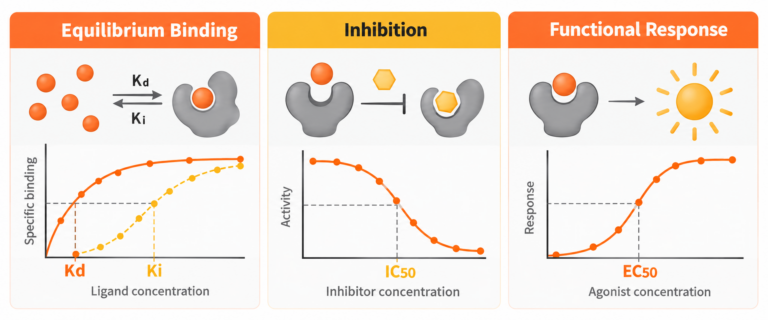
Kd and Ki describe binding-related properties; IC50 and EC50 describe outcomes in specific inhibition or functional assays. Their values are comparable only when the assay…
IGF-1 LR3 (Long R3 IGF-1) is a modified form of insulin-like growth factor 1. The modification involves substituting the glutamic acid at position 3 with…
Ipamorelin is a pentapeptide growth hormone secretagogue that acts through the ghrelin receptor (GHS-R1a). It is notable for its high selectivity — it stimulates growth…